
What “Respiratory Disease PCR Quality Control” means in the lab
In RT-qPCR workflows, quality control is the set of planned checks that verify each stage of the process:
-
Pre-analytical integrity (collection medium, transport conditions, inhibitors, sample handling)
-
Extraction performance (nucleic acid recovery and reagent integrity)
-
Amplification performance (enzyme activity, cycling conditions, contamination control)
-
Detection and analysis (thresholds, baselines, Ct/Cq stability, interpretation rules)
Public protocols and guidance documents illustrate these control principles clearly. For example, the CDC’s real-time RT-PCR diagnostic panel instructions emphasize including a no template control (NTC) and an appropriate positive control in each run, and using a human gene target (e.g., RNase P) as a specimen/extraction quality control. U.S. Food and Drug Administration+1
If you want refresher references for readers who are new to nucleic acid testing, NIH-hosted resources such as NCBI’s PCR-related books and methods content and the broader sequencing/testing educational pages at genome.gov are strong, stable starting points.
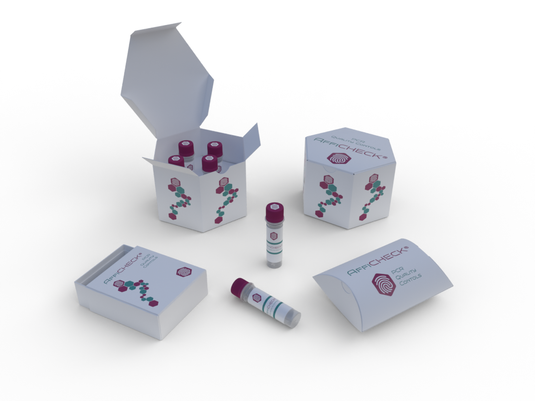
The core control types every respiratory RT-qPCR workflow should consider
A robust respiratory PCR QC plan typically includes four complementary control categories.
No Template Control (NTC): contamination and reagent check
The NTC contains PCR-grade water (or buffer) instead of sample nucleic acid. It’s designed to reveal contamination in reagents, workflow, or lab environment. CDC protocol documents explicitly require NTC inclusion. See the CDC Trioplex rRT-PCR IFU for an example control description and expectations. CDC Trioplex IFU (PDF). CDC Stacks
Positive amplification control: confirms chemistry + target detection
A positive control demonstrates that primers/probes and master mix can amplify a known target. Many reference protocols specify a dedicated positive control material per run. The CDC 2019-nCoV panel documentation is a clear example of how positive controls are structured in a real RT-PCR workflow. FDA-hosted CDC panel document (PDF). U.S. Food and Drug Administration+1
Extraction/process control: verifies extraction worked (not just PCR)
A process control should pass through extraction with the sample batch to show that nucleic acid isolation occurred successfully and extraction reagents performed. Many CDC workflows use a human gene target (often RNase P) as an indicator of specimen/extraction quality. For example, the CDC Flu SC2 multiplex assay detects human RNase P to monitor specimen quality control. CDC Flu SC2 assay page. CDC+1
External quality control material: run-to-run benchmarking
External QC material is used to benchmark performance across instruments, operators, days, and reagent lots. A well-known example of reference-grade material for RT-qPCR evaluation is the NIST SARS-CoV-2 Research Grade Test Material, created to support assay evaluation and benchmarking. NIST SARS-CoV-2 RGTM. NIST+1
Setting acceptance criteria: what to measure (and why)
Quality control becomes truly useful when you define acceptance criteria tied to measurable outputs.
Ct/Cq ranges and control trends (Levey–Jennings mindset)
For external positive controls (at a defined concentration), many labs track:
-
expected Ct range (mean ± tolerance)
-
day-to-day drift
-
sudden shifts (lot change, instrument issue, pipetting variance)
This is not about “getting any amplification”—it’s about stable performance.
Limit of Detection (LoD) verification and analytical validation
For method development and validation, regulators and standards bodies repeatedly highlight core performance characteristics for PCR assays, including:
-
Limit of Detection (LoD) / analytical sensitivity
-
Analytical specificity (selectivity)
-
Extraction efficiency
-
Inclusivity and cross-reactivity (especially for multi-target respiratory panels)
FDA templates and guidance documents outline these validation expectations for molecular diagnostics (even if your work is RUO, these remain practical benchmarks). See FDA’s molecular diagnostic templates and validation guidance PDFs. FDA molecular diagnostic template (PDF) and FDA validation guidance (PDF). U.S. Food and Drug Administration+2U.S. Food and Drug Administration+2
For a peer-reviewed lab validation perspective (open access), this paper provides suggested validation considerations for real-time PCR assays: Validation guidelines paper (PMC). PMC
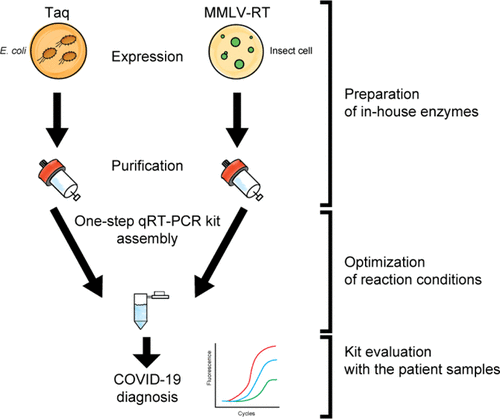
qPCR efficiency, standard curves, and why they matter for QC
Even when you’re running qualitative RT-qPCR, efficiency and curve behavior can flag problems early (inhibition, primer issues, instrument calibration, pipetting errors).
A common efficiency benchmark in the literature is ~90–110% for well-behaved qPCR assays, derived from slope-based calculations. For an NIH-hosted open-access example stating this range, see: qPCR efficiency range (PMC). PMC
Practical, lab-friendly university guides that explain standard curves, slope expectations, and efficiency checks include:
-
Boston University qPCR quantification guide (PDF): bu.edu qPCR guide Boston University
-
Oregon State real-time PCR primer (PDF): oregonstate.edu real-time PCR Center for Quantitative Life Sciences
-
University of Puget Sound qPCR user guide (PDF): pugetsound.edu qPCR guide pugetsound.edu
For deeper rigor on estimating PCR efficiency correctly, see the open-access methodological discussion: PCR efficiency estimate recommendations (PMC). PMC
Specimen handling and matrix effects: keeping “pre-PCR” from breaking your run
Respiratory matrices (swabs, transport media, mucus) can carry PCR inhibitors or vary in nucleic acid yield. Even in non-clinical contexts (e.g., method evaluation studies), your QC plan should anticipate these effects by including:
-
an extraction/process control (e.g., RNase P or a spiked control)
-
negative matrix controls (if you validate with realistic matrices)
-
defined storage/transport conditions for reproducibility
CDC provides practical specimen collection and handling guidance for respiratory testing contexts that can inform lab SOPs for sample integrity. For example: CDC clinical specimen guidelines and influenza specimen collection resources such as CDC influenza information for collection of respiratory specimens. CDC+1
Multiplex respiratory PCR: QC considerations unique to multi-target assays
Multiplex RT-qPCR panels (e.g., influenza A/B + SARS-CoV-2 + internal control) increase testing efficiency but add QC complexity:
-
primer/probe competition and signal balance
-
channel bleed-through / spectral calibration
-
target dropouts at low copy numbers
-
ensuring the internal control remains interpretable
CDC’s Flu SC2 multiplex assay is a well-documented example of a multiplex approach, including the role of RNase P as a specimen QC marker. CDC Flu SC2 assay and the related Emerging Infectious Diseases paper: EID Flu SC2 multiplex (CDC). CDC+2CDC+2
Reporting and reproducibility: MIQE as a “QC mindset” for RT-qPCR
Even if you’re not publishing, MIQE principles map well to internal QC discipline:
-
document primer/probe sequences and concentrations
-
record cycling conditions and instrument model/software
-
define thresholds/baselines consistently
-
report control outcomes and acceptance rules
-
track extraction details and sample integrity metrics
The MIQE guidelines are widely cited and remain a primary reference for qPCR transparency: MIQE on PubMed (NIH). PubMed+1

Common failure patterns—and what your QC material helps you catch
Pattern 1: Positive control Ct shifts higher across runs
Often indicates reagent degradation, pipetting variance, instrument drift, or suboptimal storage. External QC trending helps you see gradual drift early.
Pattern 2: NTC shows amplification
Suggests contamination or carryover. NTC inclusion is a standard expectation in CDC-style protocols. CDC Trioplex IFU (PDF). CDC Stacks
Pattern 3: Internal/process control fails but positive control is fine
Points toward extraction failure, inhibition, or sample/matrix issues—one reason human RNase P (or an equivalent control) is so common in respiratory workflows. CDC+1
Pattern 4: Multiplex target imbalance
May reflect competition or concentration differences; stable external QC at multiple levels (e.g., “low positive” and “moderate positive”) can reveal where the panel loses robustness.
Where your product fits: “Respiratory Disease PCR Quality Control” as a workflow stabilizer
A Respiratory Disease PCR Quality Control product is most valuable when it is positioned as external run control material that supports:
-
run-to-run consistency (trendable Ct targets)
-
operator-to-operator comparability
-
lot-to-lot monitoring
-
method development and verification (including LoD checks and reproducibility)
-
multiplex panel benchmarking across respiratory targets
For your product page and SEO, the strongest non-YMYL framing is: “external QC material for respiratory RT-qPCR workflows”—helping labs confirm that extraction + amplification + detection behave as expected (without making clinical claims). Referencing established benchmarking concepts like NIST reference materials can reinforce trust and technical relevance. NIST RGTM. NIST+1
Suggested “edu/gov” hyperlinks you can keep in the article (already embedded above)
You now have 15+ .edu / .gov links embedded directly in the text, including NIH/NCBI, CDC, FDA, and NIST resources such as:
-
NIH PubMed MIQE: https://pubmed.ncbi.nlm.nih.gov/19246619/
-
CDC Flu SC2 assay: https://www.cdc.gov/flu/php/laboratories/influenza-sars-cov-2-multiplex-assay.html
-
FDA molecular diagnostic template (PDF): https://www.fda.gov/media/135900/download
-
NIST RGTM: https://www.nist.gov/programs-projects/sars-cov-2-research-grade-test-material
-
BU qPCR guide (PDF): https://www.bu.edu/iscf/files/2010/07/qPCR_Quant_Protocol_Guide_11322363_A.pdf
(And many more embedded in the sections above.)