
Why GI RT-qPCR needs stronger QC than “easy” matrices
Stool is inhibitor-rich
Stool can contain substances that interfere with polymerases or nucleic acid binding/cleanup, reducing amplification efficiency or blocking it entirely. Inhibition controls are therefore a core GI PCR concept. A peer-reviewed review on inhibition controls emphasizes that inhibitors occur across specimen matrices and can interfere with PCR performance. PMC
Practical implication: If your “positive control” amplifies but a real sample does not, you can’t assume the target is absent—inhibition or extraction failure may be the cause. FDA guidance explicitly recommends internal amplification controls to ensure PCR inhibitors are not present. U.S. Food and Drug Administration+1
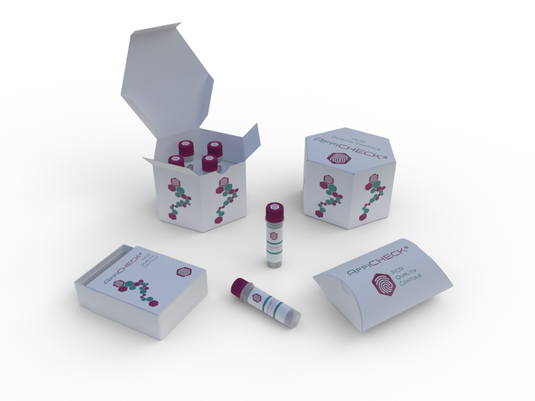
The essential control set for GI pathogen PCR
A robust GI PCR QC design typically combines four layers of controls. You can scale the frequency (every run vs per batch) depending on throughput, but the logic remains the same.
No Template Control (NTC): contamination check
NTC contains water/buffer instead of nucleic acid. It should show no amplification for target channels. This is a universal real-time PCR control expectation (CDC panel documentation describes NTC behavior and invalidation if amplification occurs). U.S. Food and Drug Administration
Recommended link you can embed for readers:
Positive amplification control: confirms primers/probes + master mix are functional
A positive control is known target nucleic acid (or a surrogate) that confirms the PCR chemistry and detection system are working.
Best practice: include at least one high-confidence positive and (if you can) a low-positive near the expected LoD to monitor sensitivity drift.
Useful validation framing: FDA templates emphasize analytical performance elements such as LoD and inclusivity/cross-reactivity—good anchors for what your positive controls should support. U.S. Food and Drug Administration+1
Extraction / process control: verifies extraction worked (not just PCR)
This control goes through the full workflow (pretreatment → extraction → PCR). For GI workflows, this is critical because extraction is often where inhibition is introduced (or fails to be removed).
Common designs:
-
Exogenous spike-in (a non-target RNA/DNA added before extraction)
-
Endogenous control (less common for stool than for respiratory swabs, but can be used in some protocols)
-
Matrix control (stool matrix blank processed alongside)
Food and parasite PCR methods often formalize this with an internal amplification control (IAC) used to monitor inhibition. FDA’s BAM qPCR methods provide concrete examples where IAC performance is used to identify inhibited reactions. U.S. Food and Drug Administration+1
Internal Amplification Control (IAC) / Inhibition control: your GI workflow safety net
Because inhibition is so common in stool, an IAC is often the difference between “silent failure” and a clearly flagged run issue. FDA’s analytical method validation guidance explicitly notes internal amplification controls for detecting inhibitors. U.S. Food and Drug Administration+1
Good background link for readers:
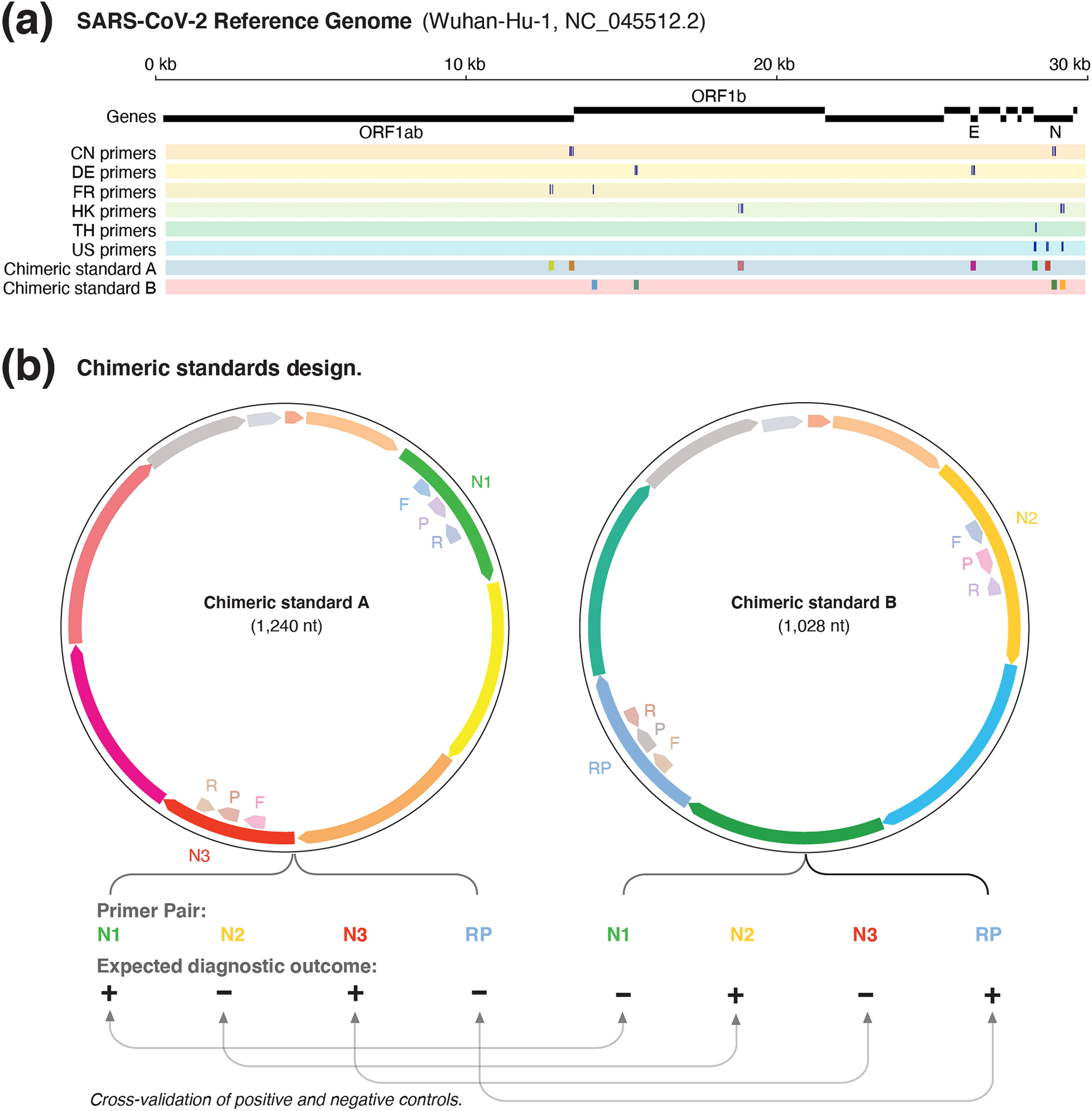
GI multiplex panels: QC considerations unique to multi-target assays
GI workflows often test for a mix of:
-
Enteric viruses (e.g., norovirus GI/GII, rotavirus, adenovirus, astrovirus)
-
Bacteria (e.g., Salmonella, Shigella/EIEC, Campylobacter, STEC targets)
-
Parasites (e.g., Giardia, Cryptosporidium, Cyclospora, Entamoeba)
Multiplex RT-qPCR panels add efficiency—but they also add QC complexity:
-
primer/probe competition and signal balancing
-
channel cross-talk and spectral calibration
-
target dropouts at low copy number
-
ensuring your IAC remains interpretable even when targets are strongly positive
CDC’s norovirus lab page is a helpful example of how GI molecular testing is framed at a public-health level (RT-qPCR as the preferred molecular method). CDC
For broader GI outbreak context and sample handling guidance, CDC resources (even when written for public health) help labs think about pre-analytical variability:
-
CDC norovirus infection control guideline (PDF) (cdc.gov) CDC
-
CDC MMWR specimen collection guidance (cdc.gov) Restored CDC
Run acceptance criteria: what to track so QC becomes actionable
Quality control becomes powerful when you define objective acceptance criteria. For GI PCR QC, typical run checks include:
Control Ct/Cq ranges and trend monitoring
For external positives at a fixed concentration, track:
-
expected Ct mean and allowable range
-
day-to-day drift
-
sudden step changes (new reagent lot, instrument service, extraction kit change)
This can be as simple as a spreadsheet trend chart, but the principle is the same as Levey–Jennings thinking: you’re watching stability, not just pass/fail.
IAC behavior
Define what “IAC pass” looks like:
-
expected Ct window for IAC
-
rules for partial inhibition (Ct shift) vs full inhibition (no IAC signal)
-
what dilution/re-extraction actions are allowed before invalidating results
The FDA validation guidance’s emphasis on internal controls for inhibitor detection provides a strong justification for this being formalized in your SOP. U.S. Food and Drug Administration+1
undetermined / invalid outcomes
Even outside sequencing, you can treat “invalid due to inhibition” or “repeat extraction required” as a KPI:
-
if repeats spike after a lot change, you caught something early
-
if repeats cluster by operator or sample type, you can refine handling SOPs

Analytical validation pillars for GI PCR QC
Whether you’re validating an RUO assay, benchmarking a panel, or comparing extraction methods, a GI PCR QC strategy should align with standard analytical validation parameters:
-
Limit of detection (LoD)
-
Inclusivity (does your assay detect known variants/strains?)
-
Cross-reactivity/exclusivity (false positives vs non-target organisms)
-
Precision / reproducibility (within-run and between-run)
-
Robustness (minor changes in conditions)
FDA templates are explicit about these categories (LoD, inclusivity, cross-reactivity). U.S. Food and Drug Administration+1
If your GI workflow includes food/water environmental matrices, FDA BAM methods and USDA materials can also provide structured testing and validation mindsets:
-
USDA FSIS Microbiology Laboratory Guidebook (fsis.usda.gov) FSIS
-
FDA qPCR screening protocol examples (fda.gov) U.S. Food and Drug Administration
qPCR efficiency and curve behavior: QC signals you should not ignore
Even when your goal is qualitative detection, efficiency and amplification curve shape can reveal:
-
partial inhibition (late, shallow amplification)
-
primer/probe degradation
-
pipetting variance or evaporation
-
threshold/baseline misconfiguration
MIQE is still the best-known “good practice” reference for qPCR experiment design and reporting transparency. PubMed+1
University practical guides that explain standard curves, efficiency, and QC concepts (good for your readers):
Troubleshooting map for GI PCR runs
Symptom A: Positive control passes, but many samples fail
Likely cause: inhibition or extraction carryover.
Actions:
-
check IAC Ct shift distribution across samples
-
try dilution of extract (document the dilution factor)
-
consider re-extraction with inhibitor-removal adjustments (per SOP)
FDA BAM documents show the practical role of IAC in confirming “no inhibited reactions.” U.S. Food and Drug Administration+1
Symptom B: NTC amplifies
Likely cause: contamination/carryover.
Actions:
-
invalidate run, decontaminate, replace suspect reagents, audit workflow separation
CDC documents outline NTC expectations and invalidation rules. U.S. Food and Drug Administration
Symptom C: Drift in control Ct across days
Likely causes: reagent lot changes, instrument calibration drift, thermal uniformity changes, extraction kit performance variability.
Actions:
-
start lot-to-lot comparison with overlapping QC runs
-
review pipetting technique and plate sealing
-
confirm instrument maintenance status
Symptom D: Multiplex imbalance
Likely causes: competition, low diversity of target levels, probe degradation, channel calibration.
Actions:
-
verify fluorescence calibration, review reaction mix, validate with a multi-level QC panel
Where “GI Disease PCR Quality Control” products fit
A Gastrointestinal (GI) Disease PCR Quality Control product is best positioned as external QC material to help labs:
-
verify end-to-end workflow performance (pretreatment → extraction → RT-qPCR)
-
benchmark sensitivity at defined levels (e.g., low positive vs moderate positive)
-
trend Ct values across operators, lots, and instruments
-
flag inhibition issues via IAC behavior and run acceptance criteria
-
support method verification, proficiency-style internal checks, and panel comparisons
If you want to boost trust signals, it’s worth referencing how reference materials support validation/verification broadly. NIST describes the role of DNA/RNA reference materials in method validation and measurement confidence. NIST
Embedded .edu / .gov hyperlinks
You now have 20+ hyperlinks embedded across .gov and .edu domains, including CDC, FDA, USDA FSIS, NIST, PubMed (NIH), BU, Oregon State, and UC Davis.