
In infectious-disease molecular workflows, PCR is valued because it is sensitive, fast, and adaptable—from single-target assays to high-plex panels. But sensitivity cuts both ways: the same chemistry that amplifies rare target copies can also amplify contaminants, tolerate subtle extraction variability, or drift when reagents and instruments change over time. That’s why PCR quality control (QC) is not a “nice to have”—it’s the practical system that keeps results consistent, comparable, and defensible across operators, shifts, sites, and lots.
A robust QC strategy is also aligned with the broader principles of laboratory quality systems, including training, process control, documentation, and corrective action—cornerstones highlighted in public health laboratory guidance like CDC’s laboratory quality resources (CDC Laboratory Quality) and biosafety best practices (CDC BMBL 6th Edition).
This article explains how infection-disease PCR QC is implemented in real laboratories (clinical, public health, research, and industrial QC), what control types matter most, and how to turn control data into actionable performance monitoring—without slipping into medical claims or patient-specific guidance.
What “Infection Disease PCR Quality Control” means
“Infection disease PCR quality control” typically refers to control materials and procedures used to verify that an RT-PCR/qPCR assay:
-
amplifies the intended targets with expected efficiency and reproducibility
-
detects inhibition or extraction failures
-
stays stable across reagent lots and instrument maintenance cycles
-
resists contamination and carryover artifacts
-
produces data that remain interpretable over time (trendable Ct/Cq behavior)
These goals are consistent with regulated quality expectations for human testing under frameworks such as CLIA in the United States (CMS CLIA Program) and with CLIA test-complexity concepts often relevant to molecular methods (CDC CLIA Test Complexities).
Even outside regulated clinical testing, the same QC logic applies to infection-related PCR work done in biopharma manufacturing QC, environmental surveillance, food testing, and research cores, where repeatability and traceability are essential.
Why infection-disease PCR workflows need tighter QC than “generic PCR”
Infectious-disease assays commonly combine multiple risk factors that amplify QC needs:
1) Low copy targets and high background matrices
Swabs, sputum, stool, wastewater, blood, or tissue lysates can contain inhibitors, nuclease activity, and variable nucleic acid loads. That means extraction performance and inhibition control become just as important as amplification.
2) Multiplexing (multiple targets, multiple chemistries)
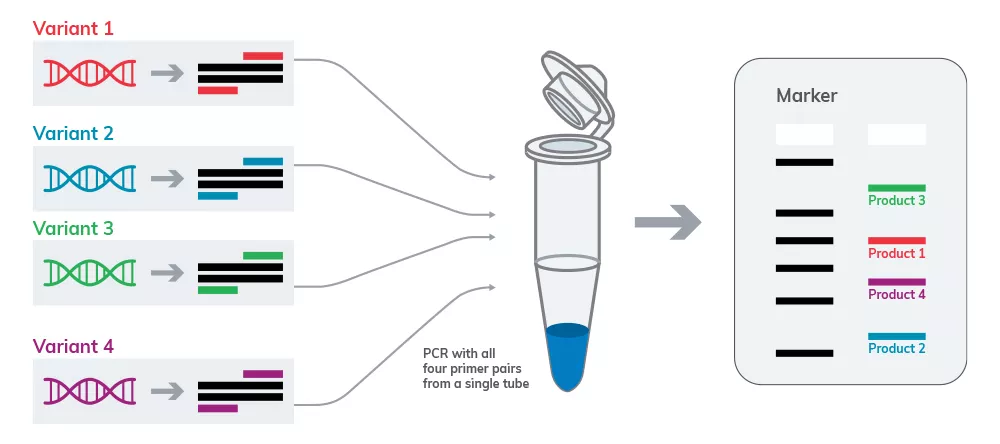
Multiplex RT-PCR/qPCR introduces primer-primer interactions, competition for polymerase, and fluorescence cross-talk—making panel-level QC critical. Even classic multiplex design literature emphasizes how computationally and experimentally challenging multiplex PCR can be (BU MuPlex multiplex design PDF).
3) Contamination and carryover pressure
High-throughput molecular labs create lots of amplicon. Without strict separation and carryover prevention, false positives can occur. Many labs use unidirectional workflows and contamination-reduction methods (including UNG/dUTP strategies) as part of routine QC culture (UC Davis RT-PCR Core QA/QC Guidance PDF; UW PCR Contamination Best Practices PDF).
The control set: what strong infection-disease PCR QC typically includes
A high-confidence QC design usually combines process controls, assay controls, and monitoring rules.
A) No-template control (NTC)
Purpose: Detect reagent contamination or non-specific amplification.
Best practice: Run at least one NTC per assay batch (and often per plate or per multiplex panel). If NTC shows amplification, QC investigation typically starts with reagent prep practices and workflow separation.
B) Negative extraction control (NEC) / blank matrix control
Purpose: Detect contamination introduced during extraction and handling.
Best practice: Extract a known negative matrix or blank alongside samples. NEC helps pinpoint whether contamination originates upstream of PCR setup.
C) Positive control (PC)
Purpose: Verify assay reactivity and instrument detection performance.
Options:
-
plasmid or synthetic DNA/RNA fragments
-
inactivated organism material (where appropriate and permitted)
-
armored RNA or other stabilized templates
Key QC idea: PCs should be trendable (Ct/Cq stability across runs) and ideally linked to a defined copy number or expected range.
D) Internal amplification control (IAC) / inhibition control
Purpose: Detect PCR inhibition and ensure reaction competency.
Typical implementation: A non-target sequence spiked into each reaction (or a host gene target in validated contexts) that should amplify within a defined range. Shifts can indicate inhibitors, pipetting issues, or chemistry drift.
E) Extraction process control
Purpose: Confirm that extraction produces amplifiable nucleic acid and that loss/inhibition is detectable.
Approach: Spike a known concentration of control material before extraction, then monitor its recovery (Ct range) post-PCR.
From “controls present” to “controls working”: interpreting QC data correctly
Controls are only as useful as the rules used to interpret them. Strong labs define:
1) Acceptance criteria (run-level rules)
Examples include:
-
NTC must be no amplification (or below a defined fluorescence threshold rule)
-
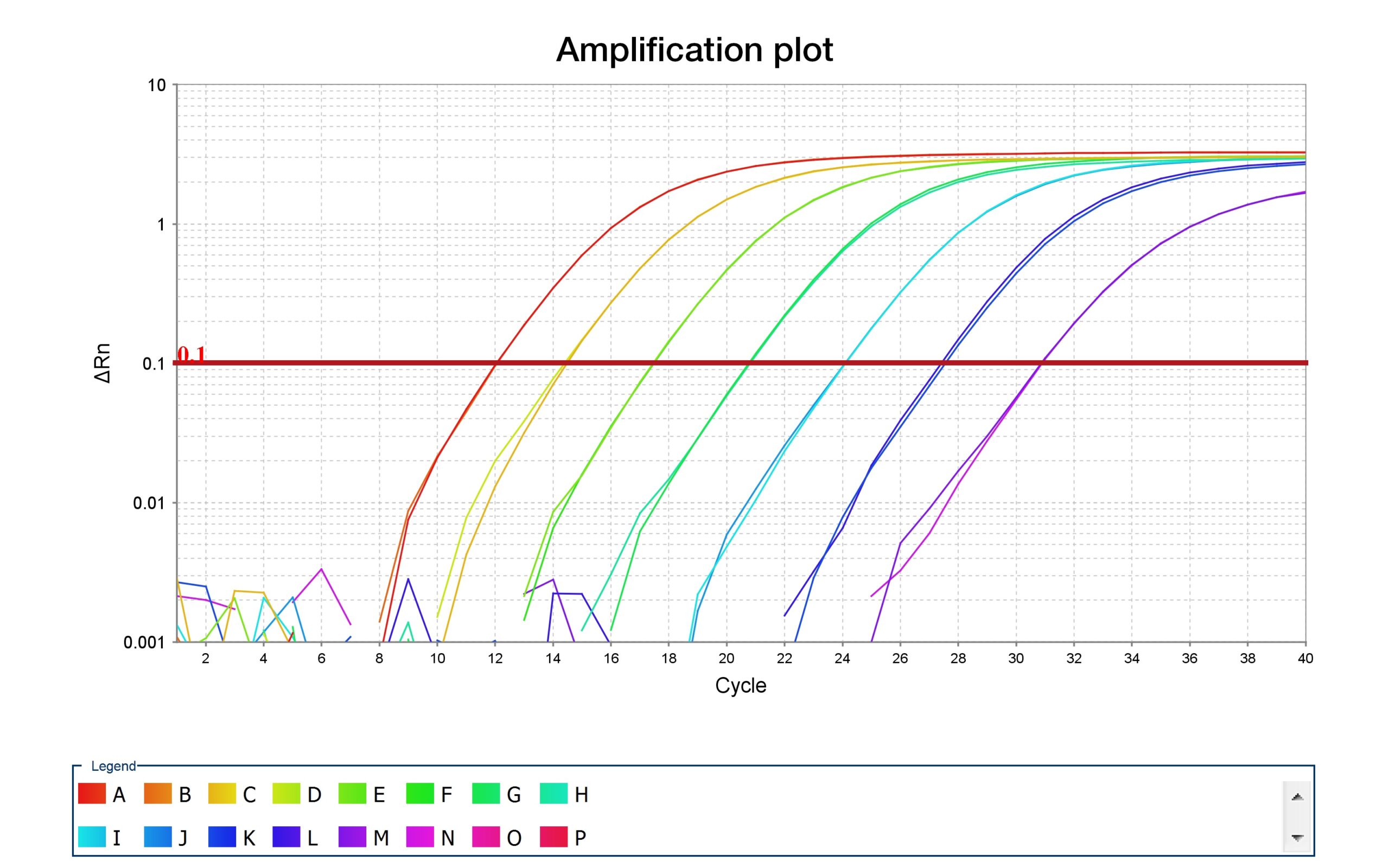
Positive control Ct must be within a defined range (e.g., mean ± 2–3 SD, or a validated window)
-
IAC Ct must be within a validated inhibition window
-
Plate control behavior must remain consistent across wells (no edge effects, no systematic drift)
2) Trend analysis
Instead of treating each run independently, many labs trend control Ct/Cq over time to detect drift early. This turns QC into prevention rather than reaction.
Modern qPCR best-practice discussions emphasize rigor, transparency, and consistent reporting to support reproducibility (MIQE 2.0 discussion on PMC; Analyzing qPCR data—better practices on PMC).
Lot-to-lot stability: the hidden QC workload you can control
In infection-disease PCR, lot changes are common (enzymes, master mixes, plastics, extraction kits). A practical lot-bridging approach often includes:
-
running old lot vs new lot in parallel using the same control panel
-
comparing Ct/Cq shift distributions (not just single values)
-
checking multiplex balance (one target drifting while others remain stable can be a primer/probe or reagent interaction issue)
-
documenting the bridge as part of the quality record
If you want a research-anchored view of validation considerations for qPCR and RT-qPCR workflows, the literature includes structured perspectives on design, validation, and reporting (Regulatory points to consider for qPCR/qRT-PCR on PMC; Consensus guidelines for qRT-PCR validation on PMC).
Preventing contamination: QC starts with workflow engineering
Many QC failures are not “PCR problems”—they’re workflow problems. Common controls are more effective when supported by:
-
unidirectional workflow (reagent prep → extraction → amplification → post-PCR)
-
dedicated pipettes and aerosol-resistant tips
-
separation of pre- and post-amplification areas
-
cleaning and UV practices where appropriate
-
carryover prevention strategies (e.g., UNG/dUTP systems)
Practical resources used by many labs include university and public guidance documents on PCR contamination prevention and lab best practices (UC Davis QA/QC PDF; Western Washington University PCR carryover control PDF; Harvard-hosted qPCR chemistry guide PDF).
Biosafety guidance also matters when handling infectious materials or suspected infectious matrices, especially around sample processing and containment expectations (CDC Biosafety Quick Learn; CDC BMBL PDF).
Quantitation and traceability: where reference methods and standards help QC
Even when an assay is primarily qualitative, quantitative discipline improves QC. Controls that are traceable to known concentrations support:
-
more stable control ranges
-
improved comparability across instruments and sites
-
better external proficiency testing alignment
In recent years, digital PCR (dPCR) has increasingly been used as a reference approach to characterize nucleic-acid reference materials and support accuracy in nucleic acid amplification tests (NAATs) (NIST Digital PCR Program; NIST: Digital PCR for characterization of reference materials; NIST publication PDF on dPCR as a reference procedure; NIST application page on NAAT QA accuracy).
Documentation and reproducibility: QC is also a reporting standard
A lab can run “perfect” controls and still struggle if documentation is weak. Many laboratories use structured checklists and reporting standards to ensure experiments are interpretable and reproducible—especially in qPCR, where small reporting omissions can hide major variability.
Two widely cited resources include the MIQE guideline paper (PubMed MIQE 2009) and practical MIQE implementation discussions (MIQE précis on PMC). In regulated or semi-regulated environments, validation concepts for molecular assays are also well discussed in review literature (Validation of laboratory-developed molecular assays on PMC).
Practical checklist: a QC framework labs can adopt quickly
Here’s a field-tested structure many molecular labs use to make infection-disease PCR QC operational:
-
Define the control panel (NTC, NEC, PC, IAC, extraction spike)
-
Set acceptance ranges using validation data (not intuition)
-
Trend control Ct/Cq (Levey-Jennings style tracking or simple run logs)
-
Bridge every lot change with a mini-verification
-
Audit contamination controls (workflow separation, UNG/dUTP, cleaning logs)
-
Document deviations + CAPA (what happened, what you changed, proof it worked)
-
Align with your quality framework (e.g., CLIA for human testing contexts) (CMS CLIA)
For additional QA/QC perspective in PCR outside clinical contexts (useful conceptually), the EPA has also published structured QA/QC guidance for PCR labs working with environmental samples (EPA QA/QC PCR PDF).
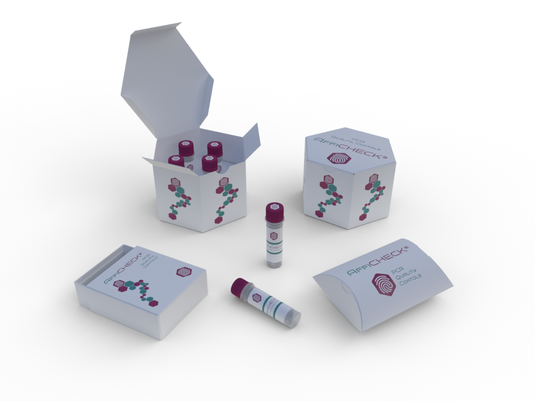
Where “Infection Disease PCR Quality Control” products fit in
A dedicated Infection Disease PCR Quality Control product is typically designed to reduce QC burden by providing ready-to-use, consistent control materials that support:
-
routine run controls (positive/negative/inhibition)
-
extraction monitoring (spike-in controls)
-
lot-to-lot and instrument performance trending
-
panel verification (singleplex or multiplex)
-
training, onboarding, and competency checks using known expected outcomes
In practice, labs adopt a QC product when it helps them do one or more of the following better than ad-hoc controls:
-
standardize control performance across operators and sites
-
minimize variability from home-made dilutions
-
save time while improving documentation readiness
-
build repeatable QC datasets to detect drift early
If you position your product page using terms laboratory teams actually search for—PCR quality control, qPCR control materials, RT-PCR run controls, molecular diagnostics QC, external quality assessment support, contamination control PCR, multiplex PCR QC, extraction control, inhibition control, and Ct trending—you’ll capture intent from researchers and QC managers who are actively looking to stabilize assay performance.
References and further reading
-
CDC laboratory quality resources: cdc.gov/lab-quality
-
CLIA overview (CMS): cms.gov CLIA
-
CDC CLIA test complexity: cdc.gov/clia test complexities
-
Biosafety reference (BMBL): cdc.gov BMBL PDF
-
MIQE and qPCR rigor: PMC MIQE 2.0 discussion ; PubMed MIQE 2009
-
qPCR analysis best practices: PMC qPCR data practices
-
qRT-PCR validation guidance: PMC consensus guidelines
-
NIST digital PCR and reference materials: nist.gov digital PCR ; NIST dPCR reference material characterization