
In modern molecular biology and molecular diagnostics laboratories, PCR-based methods (including conventional PCR, RT-PCR, and real-time qPCR) are trusted because they are sensitive, specific, and scalable. But that power comes with a reality every experienced scientist knows: PCR results are only as reliable as the quality system behind them. When targets are low-copy, inhibitors are present, or workflows are highly multiplexed, even small process variations can shift Ct values, reduce reproducibility, or create false positives through contamination.
That is exactly why Critical Infectious Disease PCR Quality Control matters—especially for laboratories handling high-impact infectious disease workflows where method consistency, traceability, and performance monitoring are non-negotiable. This article focuses on laboratory applications, not clinical advice, and outlines how robust PCR quality control materials and practices help laboratories demonstrate assay performance, stabilize routine operations, and support internal QA/QC and external quality expectations.
Why PCR Quality Control is “Critical” in Infectious Disease Workflows
Infectious disease PCR workflows combine several risk multipliers:
-
Complex sample matrices (swabs, saliva, stool, wastewater, tissues) that introduce inhibitors and variable extraction yields
-
Very low target abundance near the limit of detection (LoD), where stochastic effects are larger
-
High-throughput processing, increasing the chance of mix-ups, cross-contamination, or drift
-
Multiplex panels, where competitive amplification can change sensitivity per target
-
Inter-laboratory comparability needs, where consistency across sites, runs, and platforms is expected
Quality control materials provide a structured way to detect and correct these risks early—before they become expensive repeats, questionable datasets, or preventable run failures.
A good QC program also aligns with recognized quality system expectations for laboratory testing control procedures (for example, CLIA quality control requirements in 42 CFR §493.1256). You can review the regulatory language here: 42 CFR § 493.1256 — Standard: Control procedures (Cornell Law School). Institut d’Information Juridique
What “PCR Quality Control” Means in Practical Lab Terms
PCR quality control is not one thing—it is a layered set of controls designed to monitor the complete analytical process, from sample to result:
1) Pre-analytical and workflow controls
These controls focus on what happens before amplification:
-
Sample handling and biosafety flow
-
Nucleic acid extraction consistency
-
Carryover and amplicon contamination prevention
-
Environmental cleanliness and segregation of pre- and post-PCR spaces
For biosafety and laboratory best practices, many labs use CDC resources such as BMBL (Biosafety in Microbiological and Biomedical Laboratories):
CDC BMBL (6th edition) PDF. CDC
For foundational training on molecular lab contamination control and workflow design, CDC also provides learning modules:
CDC Basic Molecular Biology eLearning Series. CDC
2) Analytical controls inside the PCR run
These controls validate the amplification reaction itself:
-
No-template control (NTC) to detect reagent contamination
-
Positive control to confirm reaction chemistry and cycling parameters
-
Internal amplification control (IAC) to detect inhibition and reaction failure
-
Extraction control to monitor extraction efficiency and sample-to-sample variability
Many public protocols and panel instructions explicitly define QC acceptance logic (including NTC and extraction controls). Example:
CDC real-time PCR identification guidance (Candida auris). CDC
3) Post-analytical controls
These controls ensure correct interpretation and reporting within the lab’s quality system:
-
Ct threshold and baseline settings are consistent
-
Standard curve or calibration logic (when used) is controlled
-
Trends are monitored (Levey-Jennings / Westgard-style thinking for Ct values)
-
Corrective actions are documented and repeat criteria are defined
Key QC Materials Used in Infectious Disease PCR
A “critical” QC strategy typically uses multiple QC material types, each answering a different question.
Positive amplification controls
Purpose: Confirm reagents, instrument performance, cycling conditions, and detection chemistry.
Best practice: Use controls spanning meaningful concentrations—including near-LoD levels—to detect drift in sensitivity before it becomes obvious.
Negative controls (NTC and matrix negatives)
Purpose: Detect contamination in reagents, water, plastics, or workflow.
Amplicon contamination is a classic PCR risk and has been studied for decades in clinical lab settings. PubMed
Internal amplification controls (IAC)
Purpose: Detect inhibition in challenging matrices and reduce “silent failure” risk.
An IAC is especially important for infectious disease workflows where sample inhibitors may vary widely across specimen types.
Extraction controls / process controls
Purpose: Validate extraction yield and identify extraction failures or variability.
In many workflows, an extraction/process control is one of the most valuable controls because it monitors the full pipeline, not only amplification.
Designing a QC Strategy That Actually Detects Problems
A strong QC plan is intentional—built to catch the most common failure modes early.
A) Control frequency: “Every run” vs “periodic”
High-throughput labs often use a hybrid model:
-
Critical controls (NTC, positive, IAC) every run
-
Broader system checks (linearity, robustness panels, environmental swabs) on a scheduled basis
The core principle behind control procedures is clearly stated in CLIA-related requirements: labs must have control procedures that monitor the accuracy and precision of the complete analytic process. Institut d’Information Juridique
B) Define acceptance criteria (quantitative and objective)
For real-time PCR QC, acceptance criteria often include:
-
Expected Ct window (mean ± tolerance)
-
Maximum allowed Ct drift across lots
-
NTC = undetermined (or Ct beyond threshold)
-
IAC must amplify within an expected range
-
Replicate consistency (ΔCt between duplicates/triplicates)
C) Trend analysis: treat Ct like a performance signal
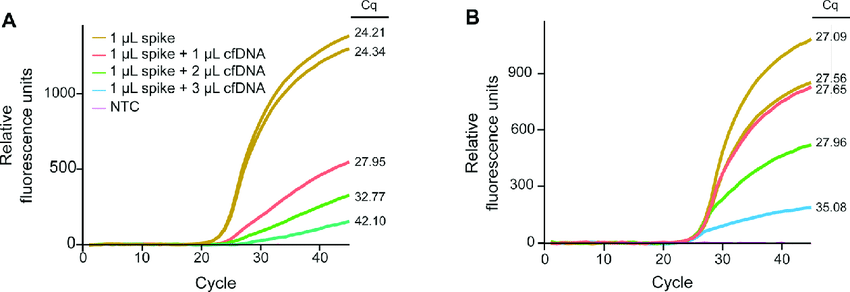
Ct values are not just pass/fail—they are a sensitive early indicator of:
-
reagent degradation
-
instrument optics drift
-
pipetting variability
-
extraction efficiency changes
-
increasing inhibitor load in certain specimen types
If you want a structured framework for qPCR experiment design and reporting expectations, MIQE remains foundational:
MIQE Guidelines (PubMed, NIH). PubMed
And newer updates continue to emphasize evolving best practices in modern qPCR applications:
MIQE 2.0 PDF. multid.se

Common Failure Modes in Infectious Disease PCR—and the QC That Catches Them
1) Contamination and false positives
What it looks like: NTC amplification, sporadic late Ct signals, batch-specific positivity.
QC signal: NTC positivity; unusual clustering of late Ct values; positives appearing in known negative matrices.
A practical mitigation strategy is procedural segregation (pre/post PCR), clean workflow directionality, and strict consumable discipline—supported by biosafety and lab practice references such as the CDC BMBL. CDC
2) Inhibition and false negatives
What it looks like: Target not detected while control amplifies poorly or not at all.
QC signal: Internal control shifts late (higher Ct), inconsistent replicates, extraction control failure.
3) Sensitivity drift (reagent lot, instrument, or protocol changes)
What it looks like: Gradual Ct increase for the same control material over time.
QC signal: Trending Ct shift; rising variance; decreased detection at low copy controls.
To support harmonization and measurement confidence, reference materials and digital PCR-based characterization are increasingly used in QC discussions. For example, NIST publications describe how digital PCR can help characterize nucleic acid reference materials used to support accurate NAAT measurements:
NIST: Digital PCR for the Characterization of Reference Materials. NIST
Practical QC Enhancements for Modern PCR Labs
Use “fit-for-purpose” validation logic
Your QC acceptance criteria should match your intended use:
-
screening workflows vs research quantification workflows
-
multiplex panel vs singleplex
-
qualitative detection vs semi-quantitative trending
For regulated analytical method validation principles (useful as a conceptual framework even outside regulated environments), FDA guidance documents are widely referenced:
FDA: Guidelines for the Validation of Analytical Methods (PDF). U.S. Food and Drug Administration
Establish contamination control checks beyond the PCR plate
If your workflow includes routine environmental monitoring, method guidance documents exist (including PCR QA/QC guidance in environmental contexts):
EPA: QA/QC Guidance for PCR (PDF). EPA
Train, standardize, and document
Consistency comes from:
-
SOP-driven workflows
-
training refreshers
-
structured deviation handling
-
lot-to-lot verification
For PCR fundamentals and lab-safe handling considerations, an accessible reference overview is available here:
NCBI Bookshelf (NIH): Polymerase Chain Reaction (PCR). CNIB
Useful .edu Resources for PCR/qPCR Practice and Operational Consistency
Below are example university-based resources laboratories often use for training, protocol orientation, and practical operation (helpful for onboarding and standardization):
(These are educational resources; your lab’s validated SOPs and quality system should remain the primary operational reference.)
Where “Critical Infectious Disease PCR Quality Control” Fits
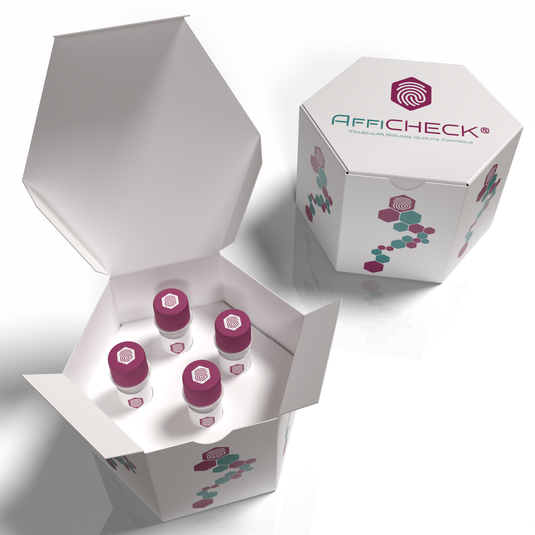
A Critical Infectious Disease PCR Quality Control product is typically used as a ready-to-deploy QC material set that helps labs:
-
verify run validity (positive/negative behavior)
-
monitor extraction + amplification performance across shifts and operators
-
track Ct trends across reagent lots and instrument maintenance cycles
-
support internal audits and documentation readiness
-
strengthen confidence in multiplex and low-copy workflows
In practice, labs often choose QC products like this to reduce the burden of preparing in-house controls, improve standardization, and make performance monitoring more systematic.
References (selected, laboratory-focused)
-
MIQE Guidelines (NIH PubMed): https://pubmed.ncbi.nlm.nih.gov/19246619/ PubMed
-
MIQE 2.0 (PDF): https://www.multid.se/publications/MIQE-ver2.pdf multid.se
-
CLIA Control Procedures (42 CFR §493.1256): https://www.law.cornell.edu/cfr/text/42/493.1256 Institut d’Information Juridique
-
CDC BMBL (6th ed., PDF): https://www.cdc.gov/labs/pdf/SF__19_308133-A_BMBL6_00-BOOK-WEB-final-3.pdf CDC
-
FDA Analytical Method Validation guidance (PDF): https://www.fda.gov/media/121751/download U.S. Food and Drug Administration
-
NIST on digital PCR and reference materials: https://www.nist.gov/publications/digital-pcr-characterization-reference-materials NIST
-
EPA PCR QA/QC guidance (PDF): https://www.epa.gov/sites/default/files/2015-07/documents/epa-qaqc-pcr.pdf EPA
-
infectious disease PCR quality control
-
qPCR quality control materials
-
real-time PCR controls (positive / negative / internal control)
-
extraction control for PCR
-
PCR contamination control and NTC
-
Ct value monitoring and trend analysis
-
multiplex PCR panel QC
-
molecular diagnostics QC workflow
-
PCR assay verification and validation support