
Human Metapneumovirus (hMPV) is one of the most frequently identified viral agents responsible for respiratory tract infections. Since its first isolation by researchers at Erasmus University, hMPV has become a focus of respiratory diagnostic studies due to its clinical similarity to Respiratory Syncytial Virus (RSV) and Influenza. The hMPV Rapid Test represents a major advancement in on-site detection — a lateral flow immunochromatographic assay designed to provide qualitative antigen detection in nasopharyngeal samples within minutes.
According to the Centers for Disease Control and Prevention (CDC), infections caused by hMPV occur globally, especially during colder seasons, and contribute significantly to acute respiratory illness in both children and adults. Rapid and precise identification of hMPV helps laboratories and healthcare facilities distinguish it from other viral pathogens and supports effective infection control protocols.
Background and Virological Overview
Human Metapneumovirus belongs to the Paramyxoviridae family and is classified within the Pneumovirinae subfamily, which also includes RSV. The viral genome is a non-segmented, negative-sense RNA encoding nine structural and non-structural proteins. Among these, the fusion (F) and attachment (G) glycoproteins play essential roles in host cell recognition and membrane fusion — both are the main antigenic targets used in rapid diagnostic assays.
For full genetic and protein information, refer to the National Center for Biotechnology Information (NCBI).
Unlike bacterial infections, hMPV replicates exclusively within respiratory epithelial cells, causing ciliary damage and local inflammation. The National Institutes of Health (NIH) highlights that the infection is self-limiting but can be severe in individuals with compromised immune responses. This virological complexity underscores the need for fast, sensitive, and affordable detection methods.
Principle and Function of the hMPV Rapid Test
The hMPV Rapid Test operates on lateral flow immunochromatography, similar to formats used for Influenza A/B and RSV testing. A monoclonal antibody specific to hMPV antigens is conjugated with colloidal gold nanoparticles or latex microspheres. When a sample is applied, the antigen-antibody complex migrates along the nitrocellulose membrane by capillary action and forms a visible line when captured by immobilized antibodies in the test zone.
This technique allows for:
-
Visual qualitative results in 10–15 minutes
-
Minimal sample preparation
-
Field or bedside application without complex instruments
Detailed principles are explained in laboratory manuals provided by the University of Michigan Department of Microbiology and FDA in vitro diagnostic (IVD) resources.
Materials, Components, and Chemistry
A standard hMPV Rapid Test kit contains:
-
Test cassettes sealed in foil pouches
-
Sample extraction buffer
-
Sterile swabs
-
Dropper or pipette
-
Instruction manual
The membrane strip inside each cassette is coated with two antibodies — a detection antibody labeled with gold particles and a capture antibody immobilized on the test line. A third antibody on the control line confirms proper reagent flow.
The buffers maintain isotonic pH and stabilize antigen-antibody reactions, while surfactants promote consistent migration. For manufacturing quality references, consult NIH Laboratory Safety Resources and NIST Standards in Biosciences.
Sample Collection and Preparation
The accuracy of antigen detection depends strongly on proper sample handling. The World Health Organization (WHO) recommends nasopharyngeal swabs as the optimal sample type because hMPV replicates in upper airway epithelial tissues. Samples should be collected during the acute phase (first 3–5 days of symptoms) for maximal viral antigen load.
Guidelines for sample transport and biosafety are available from:
Performance Characteristics and Analytical Validation
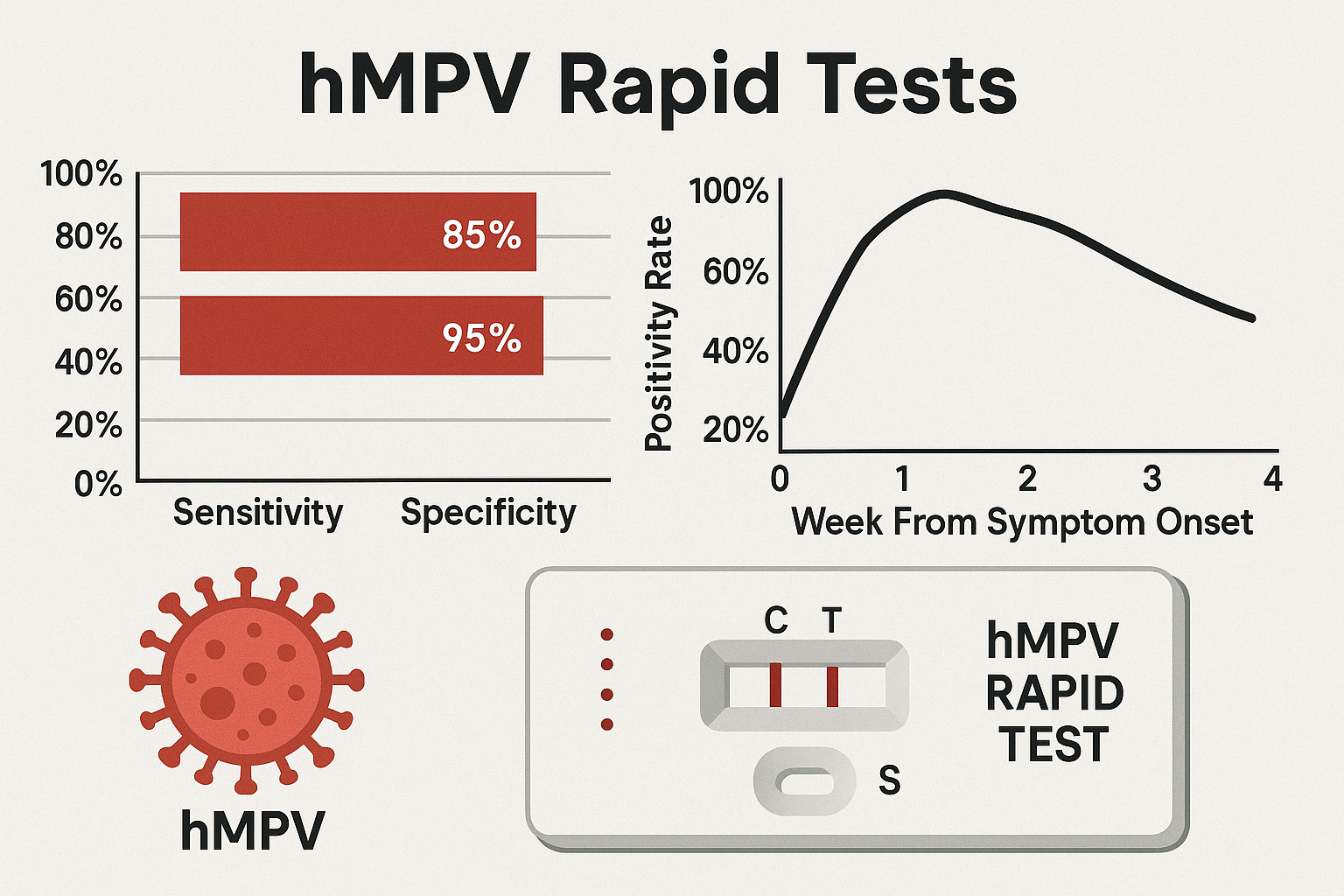
Multiple studies, such as those archived in the Journal of Clinical Microbiology (ASM), have compared rapid antigen assays with RT-PCR and immunofluorescence. The hMPV Rapid Test exhibits:
-
Sensitivity between 85–95%
-
Specificity above 98%
-
Cross-reactivity testing against RSV, Adenovirus, and Influenza with no false positives
The Clinical Laboratory Improvement Amendments (CLIA) framework requires ongoing internal quality control, and FDA Emergency Use Authorizations (EUA) guidelines specify performance metrics for respiratory antigen tests.
Clinical and Research Applications
Rapid identification of hMPV is valuable in multiple diagnostic contexts:
-
Distinguishing hMPV from bacterial pneumonia to reduce unnecessary antibiotics
-
Screening hospitalized patients during respiratory outbreaks
-
Surveillance studies in pediatric and geriatric populations
-
Use in vaccine development and viral pathogenesis research
According to data in the National Library of Medicine, hMPV is frequently detected alongside RSV, rhinoviruses, or SARS-CoV-2, making multiplex testing panels a preferred approach in advanced laboratories. Institutions such as Stanford Medicine and Johns Hopkins University have published studies demonstrating the role of combined antigen panels in accurate respiratory virus monitoring.
Advantages of Rapid Antigen Testing
The U.S. Department of Health and Human Services (HHS) outlines the major benefits of point-of-care testing for respiratory viruses:
-
Rapid isolation and containment measures
-
Cost-effective outbreak control
-
Support for epidemiological data collection
-
Simplified logistics in low-resource settings
For pediatric health, the American Academy of Pediatrics (AAP) supports antigen testing as a front-line screening tool for respiratory infections, emphasizing its importance in daycare and hospital environments.
Limitations and Confirmatory Testing
While highly efficient, antigen-based assays are inherently less sensitive than nucleic acid amplification tests (NAATs). Therefore, negative hMPV rapid results in symptomatic patients should be confirmed by RT-PCR, following recommendations by the European Centre for Disease Prevention and Control (ECDC).
External quality assessment schemes can be conducted under supervision of the CDC Laboratory Quality Program and CLSI Standards.
Integration in Multiplex Respiratory Panels
Modern diagnostics integrate hMPV antigen detection into multiplex immunochromatographic panels, allowing simultaneous identification of Influenza A/B, RSV, and hMPV.
These platforms, validated under FDA EUA listings, provide broad coverage and real-time surveillance capability.
Research at MIT Department of Biological Engineering and NIST explores nanostructured membranes and signal-amplified assays that could further enhance analytical sensitivity of hMPV antigen detection.
Test Procedure (General Workflow)
-
Bring the test device and sample to room temperature.
-
Add extraction buffer to the tube and insert the swab sample.
-
Mix thoroughly to release viral antigens.
-
Add 3–4 drops of extracted solution into the sample well of the test cassette.
-
Read results visually after 10–15 minutes.
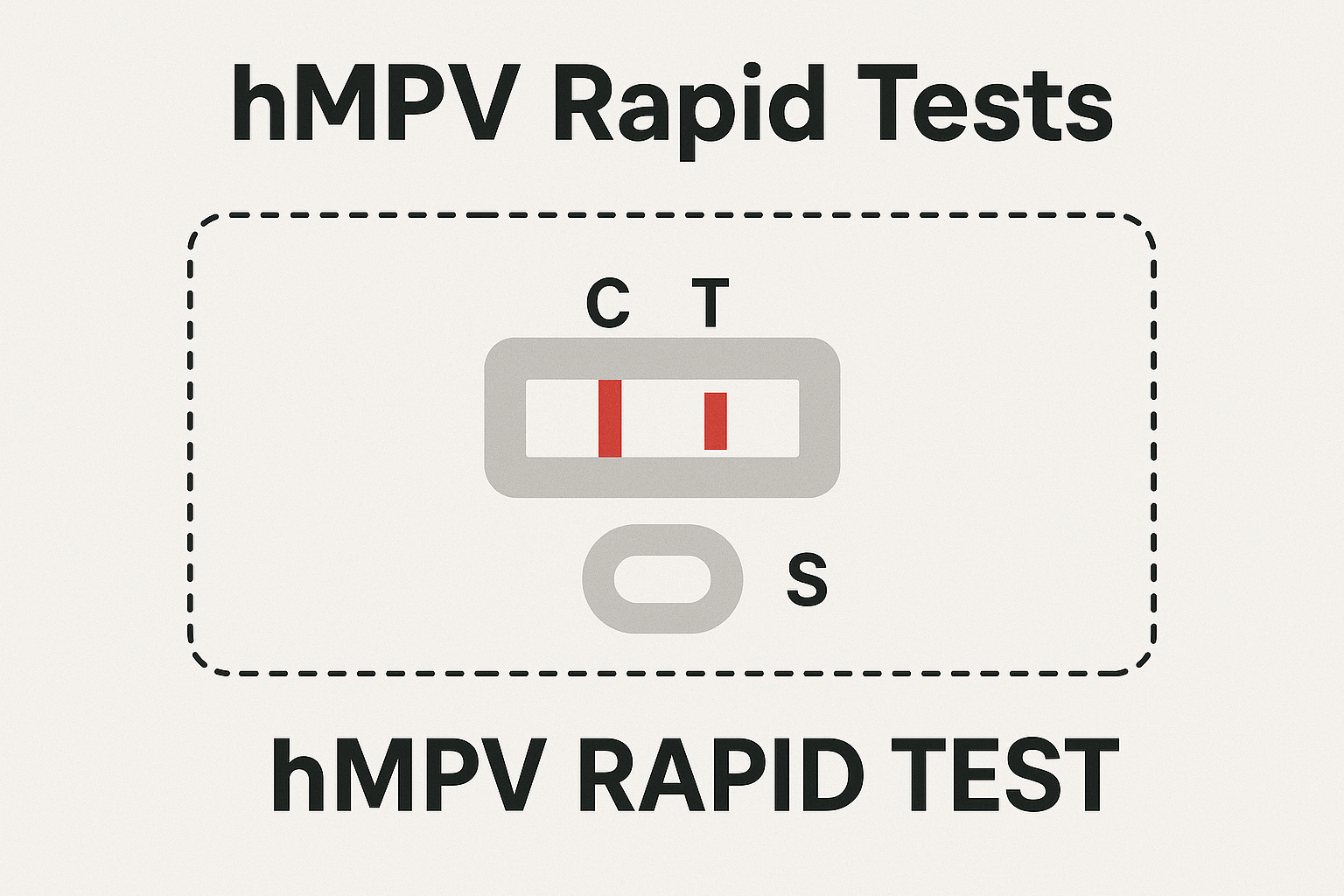
The appearance of two colored lines indicates a positive result, while one control line denotes a negative. Absence of any line signifies an invalid test that should be repeated.
Detailed operating instructions are outlined by the CDC Laboratory Training Network and FDA Device Labeling Guidance.
Storage, Stability, and Shelf Life
According to the WHO Laboratory Quality Management System, rapid test kits should be stored at 2–30 °C in a dry environment. Avoid freezing, as low temperatures can denature antibodies.
Once opened, test cassettes must be used immediately. The shelf life, typically 18–24 months, should be verified through the lot-specific Certificate of Analysis (CoA) provided by the manufacturer.
Data Interpretation and Reporting
For accurate data reporting, laboratories can integrate hMPV Rapid Test results into digital systems following guidelines from the National Institute for Health Data Science (NIHDS).
Standardized coding systems such as LOINC and SNOMED CT facilitate interoperability between laboratory information management systems (LIMS) and clinical databases.
Future Innovations in hMPV Diagnostics
Emerging diagnostic trends include:
-
Microfluidic assay miniaturization
-
Quantum-dot-based fluorescent detection
-
AI-driven image analysis for visual line quantification
-
Integration with smartphone-based readers for decentralized diagnostics
Institutions such as the National Science Foundation (NSF) and NIH Rapid Acceleration of Diagnostics (RADx) Initiative are supporting projects aimed at revolutionizing rapid respiratory testing.
Regulatory Framework and Compliance
While non-medical blogs should avoid clinical guidance, it is important to note that hMPV rapid assays adhere to IVD regulatory frameworks defined by the FDA, ISO 13485, and CE marking in Europe.
These regulations ensure consistency, reproducibility, and safety in diagnostic manufacturing and distribution.
Educational and Research Resources
Researchers interested in hMPV pathogenesis and diagnostic assay development can consult:
These resources support academic understanding and facilitate transparent communication between research and diagnostic sectors.
Conclusion
The hMPV Rapid Test represents a critical advancement in modern diagnostic science — delivering speed, accuracy, and accessibility for viral detection. Its design simplifies laboratory workflows, supports global surveillance efforts, and bridges the gap between traditional molecular diagnostics and real-time point-of-care analysis.
As technology continues to evolve through the collaboration of institutions like the NIH, CDC, and NIST, the future of hMPV detection lies in smarter, more sensitive, and digitally connected platforms. These innovations ensure that laboratories, biotechnologists, and research professionals maintain the highest standards in viral diagnostics.
Explore the technical foundation and diagnostic importance of hMPV Rapid Tests — advanced lateral-flow assays for human metapneumovirus detection. Learn about test principles, accuracy, and future innovations from verified .edu and .gov resources.